Solars power generation almost halves during winter in any semi-northern/southern region (compared to peak in summer). If wind isn’t plentiful in those areas then you do run into a generation issue.
Solar is great, but I do suspect that there will need to be something else beyond just solar and batteries to make renewable work.
Yeah, exactly. Right now people’s electricity usage drops during the winter because they use oil and gas. But my electricity usage is actually higher in the winter because we have electric heating.
I haven’t looked at wind powers efficacy, but I suspect wind and solar isn’t enough for generation in many places (or at least not economical yet). So there needs to be something else.
Not saying renewable aren’t the future, just calling out that there is still some things to figure out.
You and your source are oversimplifying things. All your source does is calculate peak solar energy.
The vast majority of households don’t have articulating solar panels, so they never reach peak solar generation. Most people just pick an installation angle and keep it there all the time.
My point is that if you pick an installation angle that is optimized for winter, it’s then less efficient during the summer, to the point where your daily energy generation ends up being similar. The downside is that each panel generates significantly less energy over the entire year, and you have to build capacity appropriately.
Is it worth the additional cost for more consistent power generation? Probably not. But my point is that it’s still possible.
There’s also another factor that you aren’t aware of: electronics are more efficient at lower temperatures. It’s not enough that a panel in winter will beat a panel in summer if the two panels’ angles are optimized for those seasons, but it does skew calculations.
If I cover up the solar panels it’ll produce zero energy all the time. That doesn’t make it a good point.
Energy generation must be economical for it to be adopted, my point is that for winter months it is harder to get energy from solar panels making them less economical. It’s possible they’re still good enough but I suspect that it actually means many places will need alternatives to meet energy production needs in the winter months.
Why do this threads always degrade to 100% renewable solutions only? We can generate most of our power via wind and sun, the rest we can buffer, we don’t need to eliminate burning just reduce it to sporadic buffering of the grid.
Of course the planet’s systems can handle some degree of CO₂ emissions. But there are fields much harder to decarbonize than energy supply. Waste removal for example.
But insisting on a zero emissions solution is exactly what I would do if I were an oil and gas CEO.
And more importantly that “most of our power” that can be generated by wind and sun is far higher than what we do now. This is not a valid argument against building out renewables as fast as possible.
It may be an argument about where our endpoint is but by that time technology and circumstances will both have changed so it’s still an invalid argument


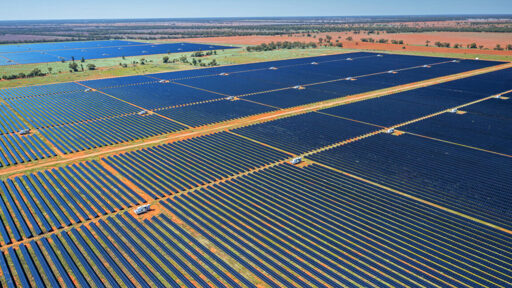
Bro has never heard of batteries, apparently.
Solars power generation almost halves during winter in any semi-northern/southern region (compared to peak in summer). If wind isn’t plentiful in those areas then you do run into a generation issue.
Solar is great, but I do suspect that there will need to be something else beyond just solar and batteries to make renewable work.
Depending on location, power usage is drastically reduced in the winter due to air conditioning not being necessary.
You’d still need some form of energy for heat during most of those months. And the most efficient heating solution (heat pumps) requires electricity
See the Drake Landing project. Worked for 17 years in freezing Canada.
Solar piping heats up salt water and stores the heat underground in sand pits all summer, heats 52 houses all winter. low tech.
Yeah, exactly. Right now people’s electricity usage drops during the winter because they use oil and gas. But my electricity usage is actually higher in the winter because we have electric heating.
I haven’t looked at wind powers efficacy, but I suspect wind and solar isn’t enough for generation in many places (or at least not economical yet). So there needs to be something else.
Not saying renewable aren’t the future, just calling out that there is still some things to figure out.
You can actually get solar power generation to be fairly consistent between summer and winter by optimizing your panels’ angle for winter months.
No, you can’t.
For an extreme example, Anchorage Alaska will see 5-6 hours of sunlight in the peak of winter vs 19-20 in the summer.
Here is a good site that breaks down the averages across each state and talks about the highs and lows - https://www.thegreenwatt.com/average-peak-sun-hours-by-state/
You and your source are oversimplifying things. All your source does is calculate peak solar energy.
The vast majority of households don’t have articulating solar panels, so they never reach peak solar generation. Most people just pick an installation angle and keep it there all the time.
My point is that if you pick an installation angle that is optimized for winter, it’s then less efficient during the summer, to the point where your daily energy generation ends up being similar. The downside is that each panel generates significantly less energy over the entire year, and you have to build capacity appropriately.
Is it worth the additional cost for more consistent power generation? Probably not. But my point is that it’s still possible.
There’s also another factor that you aren’t aware of: electronics are more efficient at lower temperatures. It’s not enough that a panel in winter will beat a panel in summer if the two panels’ angles are optimized for those seasons, but it does skew calculations.
If I cover up the solar panels it’ll produce zero energy all the time. That doesn’t make it a good point.
Energy generation must be economical for it to be adopted, my point is that for winter months it is harder to get energy from solar panels making them less economical. It’s possible they’re still good enough but I suspect that it actually means many places will need alternatives to meet energy production needs in the winter months.
Why do this threads always degrade to 100% renewable solutions only? We can generate most of our power via wind and sun, the rest we can buffer, we don’t need to eliminate burning just reduce it to sporadic buffering of the grid.
Because burning kills the climate. We need to eliminate it.
The planet can handle low levels of C02, just not the levels we are doing.
But insisting on a zero emissions solution is exactly what I would do if I were an oil and gas CEO.
Of course the planet’s systems can handle some degree of CO₂ emissions. But there are fields much harder to decarbonize than energy supply. Waste removal for example.
How so?
Not if it’s closed loop or C negative with renewable sources. There’s nothing inherently bad about combustion, it’s just the scale and externalities.
Fuck that, fossil’s too expensive
Not if demand drops 90%.
Well, fingers crossed then
And more importantly that “most of our power” that can be generated by wind and sun is far higher than what we do now. This is not a valid argument against building out renewables as fast as possible.
It may be an argument about where our endpoint is but by that time technology and circumstances will both have changed so it’s still an invalid argument