Solar panels have a way longer lifespan than what’s usually said (20 years is what people calculate with. But at that point they’re not broken or anything). They lose a bit of efficiency but that doesn’t really matter for already installed systems… So what this means is that this power source is here now and it will basically stay forever. Replace the odd panel here and there, but the power curve that we have massive amounts of power during mid day, pretty much regardless of where you live is here to stay. It’s a miracle really. I suspect the effects of it on the economies and society haven’t even begun to show.
The US could become a green powerhouse overnight if we just blitzed solar installations. Rural towns could become energy independent and fund their local government with solar power production, large cities could buy power from their local area and provide repair and materials recycling. In rural areas power bills could become a thing of the past. Households that use less than they produce could generate income from net metering. Farms could power their entire operation with panels above or adjacent to crops, selling excess power as well as produce.
Instead we have greedy old fucks fighting over the decaying corpse of the fossil fuel industry and trying their best to stop the world from turning. Fucking infuriating.
Just do like France and start installing over the US’ endless, endless seas of parking lots. Property owners would eventually turn profit. It saves on parking lot and car damage from sun/heat exposure. Seems like a no-brainer but no one is doing it.
There must be reasons why there aren’t at least SOME areas are doing this, since it essentially doesn’t exist. Can’t be JUST the cash layout on the panels, and US reluctance to do green energy. Is it power grid issues? Insurance problems somehow? Something else (serious replies only, no lazy “because capitalism / they are stupid / etc”)?
The upfront costs aren’t negligible, they’re the only reason I don’t have solar panels on my roof right now. It’s not just panels themselves, it’s installation and wiring and making sure it plays nice with grid power and making sure it won’t catch fire and all that. They aren’t huge costs and they’re certainly recoverable in the long run, but that doesn’t mean much if you can’t afford to get started.
You say it like that’s a common thing in the US. Maybe it’s more common here than elsewhere but it’s not typical. Most people who buy cars don’t get new cars.
Solar panel costs range from $16,600 to $20,500 for the average 6.5 kW system, but prices can vary from as little as $7,700 for smaller solar systems to upward of $34,700 for larger systems.
What I’m saying is that a lot of people don’t have the money for new cars period, it’s not like they can just choose to forego one year and pick themselves up some solar panels. Even if they have enough to afford a used car, it’s not typical for people to have five figures of liquid capital just… around for non-necessities. Even if you can get credit for a loan, that’s another monthly note that you might not be able to afford even with the energy bill savings, if your entire paycheck is already insufficient to cover necessities. The people who can afford to burn money on new cars are very much the exception.
Maybe, but when I got quotes for solar it was much higher cost than that, and only to replace half my electricity use
While I live on the north, they estimated based on the rated capacity of the panels, as if the amount of sun doesn’t matter
I’ve been putting something aside for deferred house projects, and I could get solar but for less than that I could do complete bathroom remodel, replace my driveway (all the way down) and maybe paint the house
Parking lots are a bit of a puzzle. This is speculation, but I suspect the slow uptake has a lot to do with the contractual relationship between the landowner and the business operator. Sometimes businesses own their own land, but I think in the US this is more an exception than the rule. These can be decades-long lease agreements that stipulate how the land can be used and what can be installed, and I bet that the installation of power infrastructure would have to be hammered out in a renegotiation with each party trying to get an advantage over the other.
There must be reasons why there aren’t at least SOME areas are doing this, since it essentially doesn’t exist.
They aren’t yet common but more are built all the time and they are far from non-existent.
You probably don’t realize how many of them there are. Here’s a link showing dozens of Solar Canopy projects done by just Lumos Solar. There’s dozens more companies across the United States doing these kinds of projects you just don’t hear about them. As examples did you know about the the solar canopy parking lots at Dell, Intel, Cincinnati Zoo, and Rutgers University? There’s also solar canopies in Omaha, Kansas City, Chicago, and Denver that you probably have never heard of.
Don’t feel bad for not knowing about them either; these kinds of project simply aren’t newsworthy unless they are tied to some major project or entity.
The real reason you don’t see parking lot solar a lot is that it’s far more expensive than just slapping some panels up in an empty field. For parking covering, the structures supporting the panels are taller, so they need to be more robust. You also have to worry about increased maintenance. Someone is going to ram a support pillar a truck once in awhile. There are far fewer people driving through empty fields. And whether to repair damage or simply to clean the panels off, there are advantages to open fields. Instead of having your panels scattered across a hundred small parking lots, they’re all in one spot. Much easier to arrange maintenance and cleaning. Not only do you save the drive, but bigger facilities can invest in cheaper solutions like panel cleaning robots.
The parking lot structures have the advantage of not taking up any additional land. But the construction and operation costs are sufficiently magnified that just building panels in an empty field is more cost competitive. Hell, if nothing else, panels in remote farm fields are maintained by rural labor, which tends to be cheaper than labor in expensive cities.
I am sure some do but I don’t think it’s the norm. Just judging from the people around me, I see some small solar installations and a few larger ones, but by far most places don’t have any visible panels.
We also have massive, massive untapped pumped hydro capacity to use as storage. It’s literally just the oil lobby. Nationalize the remaining oil companies after allowing them to spin off their refineries and chemical processing plants (still useful, can also use biomass feedstock). Not rocket science, just intractable politics (because of Citizens United).
If we converted the land used for growing corn, specifically to be made into ethanol fuel, to house solar panels that alone would create more energy than the US is currently using. Then you can plant cash crops that need more shade, but have higher profit margins, in the same fields as the solar panels and still maintain the land’s agricultural importance
I don’t think you’re thinking this through. How would the corpos turn a profit between now and when those panels are up? You’re not thinking about the short term loss of profits. It could render and entire family vacation without champaign! Downright unamerican.
I heard about that in a technology connections video. Apparently it’s eight times the current US electricity consumption, even though those fields are mostly in the higher latitudes.
I’m using second hand panels I got for free. They are 25 years old, made in Germany and they are still at +95% health. They produce 255 Kw per panel, modern panels are twice as efficient. But still, this is pretty impressive.
Refineries are not immune to storms either. At least solar panels are 99% Aluminum, glass, and silicon, which you can melt down to make more solar panels.
We’ll always have refineries though. And that’s ok. We want hydrogen, methanol, ammonia, plastics, among many other things. But we can just as easily feed them with waste biomass, farmed biomass (not corn- switchgrass or poplar or mesquite or hemp, etc). Chevron holds a patent to make gasoline from biomass and the break even price point is $12/gal. We’re not far off. And with subsidies or taxes we’d be there now (had the clean power plan survived for example).


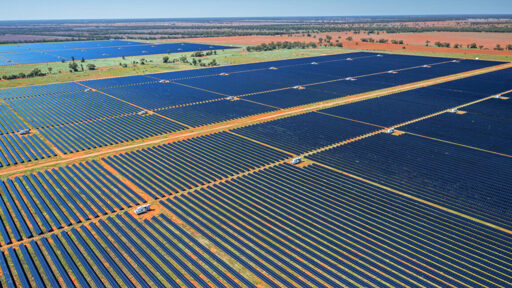
Solar panels have a way longer lifespan than what’s usually said (20 years is what people calculate with. But at that point they’re not broken or anything). They lose a bit of efficiency but that doesn’t really matter for already installed systems… So what this means is that this power source is here now and it will basically stay forever. Replace the odd panel here and there, but the power curve that we have massive amounts of power during mid day, pretty much regardless of where you live is here to stay. It’s a miracle really. I suspect the effects of it on the economies and society haven’t even begun to show.
The US could become a green powerhouse overnight if we just blitzed solar installations. Rural towns could become energy independent and fund their local government with solar power production, large cities could buy power from their local area and provide repair and materials recycling. In rural areas power bills could become a thing of the past. Households that use less than they produce could generate income from net metering. Farms could power their entire operation with panels above or adjacent to crops, selling excess power as well as produce.
Instead we have greedy old fucks fighting over the decaying corpse of the fossil fuel industry and trying their best to stop the world from turning. Fucking infuriating.
Just do like France and start installing over the US’ endless, endless seas of parking lots. Property owners would eventually turn profit. It saves on parking lot and car damage from sun/heat exposure. Seems like a no-brainer but no one is doing it.
There must be reasons why there aren’t at least SOME areas are doing this, since it essentially doesn’t exist. Can’t be JUST the cash layout on the panels, and US reluctance to do green energy. Is it power grid issues? Insurance problems somehow? Something else (serious replies only, no lazy “because capitalism / they are stupid / etc”)?
The upfront costs aren’t negligible, they’re the only reason I don’t have solar panels on my roof right now. It’s not just panels themselves, it’s installation and wiring and making sure it plays nice with grid power and making sure it won’t catch fire and all that. They aren’t huge costs and they’re certainly recoverable in the long run, but that doesn’t mean much if you can’t afford to get started.
Not saying that there’s no upfront cost, but in the US people buy 60k dollar cars on credit that lose half their value in the first year or two.
So I think it’s more a problem of priorities, and choosing loss of value over future profit.
You say it like that’s a common thing in the US. Maybe it’s more common here than elsewhere but it’s not typical. Most people who buy cars don’t get new cars.
https://www.experian.com/blogs/ask-experian/average-car-price/
https://www.forbes.com/home-improvement/solar/cost-of-solar-panels/
Maybe it’s time to buy a cheap car and solar panels.
What I’m saying is that a lot of people don’t have the money for new cars period, it’s not like they can just choose to forego one year and pick themselves up some solar panels. Even if they have enough to afford a used car, it’s not typical for people to have five figures of liquid capital just… around for non-necessities. Even if you can get credit for a loan, that’s another monthly note that you might not be able to afford even with the energy bill savings, if your entire paycheck is already insufficient to cover necessities. The people who can afford to burn money on new cars are very much the exception.
Maybe, but when I got quotes for solar it was much higher cost than that, and only to replace half my electricity use
While I live on the north, they estimated based on the rated capacity of the panels, as if the amount of sun doesn’t matter
I’ve been putting something aside for deferred house projects, and I could get solar but for less than that I could do complete bathroom remodel, replace my driveway (all the way down) and maybe paint the house
Up-front costs are a factor but can’t be the only one. Although I’m focused on the solar over parking lot case specifically.
Parking lots are a bit of a puzzle. This is speculation, but I suspect the slow uptake has a lot to do with the contractual relationship between the landowner and the business operator. Sometimes businesses own their own land, but I think in the US this is more an exception than the rule. These can be decades-long lease agreements that stipulate how the land can be used and what can be installed, and I bet that the installation of power infrastructure would have to be hammered out in a renegotiation with each party trying to get an advantage over the other.
I think that is incredibly likely to be another factor
They aren’t yet common but more are built all the time and they are far from non-existent.
You probably don’t realize how many of them there are. Here’s a link showing dozens of Solar Canopy projects done by just Lumos Solar. There’s dozens more companies across the United States doing these kinds of projects you just don’t hear about them. As examples did you know about the the solar canopy parking lots at Dell, Intel, Cincinnati Zoo, and Rutgers University? There’s also solar canopies in Omaha, Kansas City, Chicago, and Denver that you probably have never heard of.
Don’t feel bad for not knowing about them either; these kinds of project simply aren’t newsworthy unless they are tied to some major project or entity.
The real reason you don’t see parking lot solar a lot is that it’s far more expensive than just slapping some panels up in an empty field. For parking covering, the structures supporting the panels are taller, so they need to be more robust. You also have to worry about increased maintenance. Someone is going to ram a support pillar a truck once in awhile. There are far fewer people driving through empty fields. And whether to repair damage or simply to clean the panels off, there are advantages to open fields. Instead of having your panels scattered across a hundred small parking lots, they’re all in one spot. Much easier to arrange maintenance and cleaning. Not only do you save the drive, but bigger facilities can invest in cheaper solutions like panel cleaning robots.
The parking lot structures have the advantage of not taking up any additional land. But the construction and operation costs are sufficiently magnified that just building panels in an empty field is more cost competitive. Hell, if nothing else, panels in remote farm fields are maintained by rural labor, which tends to be cheaper than labor in expensive cities.
they don’t do this already?
Canadian farms run 100% on solar for water pumps and sprinklers.
I am sure some do but I don’t think it’s the norm. Just judging from the people around me, I see some small solar installations and a few larger ones, but by far most places don’t have any visible panels.
We also have massive, massive untapped pumped hydro capacity to use as storage. It’s literally just the oil lobby. Nationalize the remaining oil companies after allowing them to spin off their refineries and chemical processing plants (still useful, can also use biomass feedstock). Not rocket science, just intractable politics (because of Citizens United).
If we converted the land used for growing corn, specifically to be made into ethanol fuel, to house solar panels that alone would create more energy than the US is currently using. Then you can plant cash crops that need more shade, but have higher profit margins, in the same fields as the solar panels and still maintain the land’s agricultural importance
I don’t think you’re thinking this through. How would the corpos turn a profit between now and when those panels are up? You’re not thinking about the short term loss of profits. It could render and entire family vacation without champaign! Downright unamerican.
I heard about that in a technology connections video. Apparently it’s eight times the current US electricity consumption, even though those fields are mostly in the higher latitudes.
I’m using second hand panels I got for free. They are 25 years old, made in Germany and they are still at +95% health. They produce 255 Kw per panel, modern panels are twice as efficient. But still, this is pretty impressive.
unless a storm hits
Refineries are not immune to storms either. At least solar panels are 99% Aluminum, glass, and silicon, which you can melt down to make more solar panels.
We’ll always have refineries though. And that’s ok. We want hydrogen, methanol, ammonia, plastics, among many other things. But we can just as easily feed them with waste biomass, farmed biomass (not corn- switchgrass or poplar or mesquite or hemp, etc). Chevron holds a patent to make gasoline from biomass and the break even price point is $12/gal. We’re not far off. And with subsidies or taxes we’d be there now (had the clean power plan survived for example).
Sure but that kind of storm incredibly rare.
And would destroy any sort of infrastructure anyways. If that’s a valid excuse we wouldn’t be building anything at all
Hurricanes, tornadoes and hail storms are rare?
See you in Florida this September!